Digital Marketing in Late 2026: The Final Quarter Playbook for AI-Driven Visibility
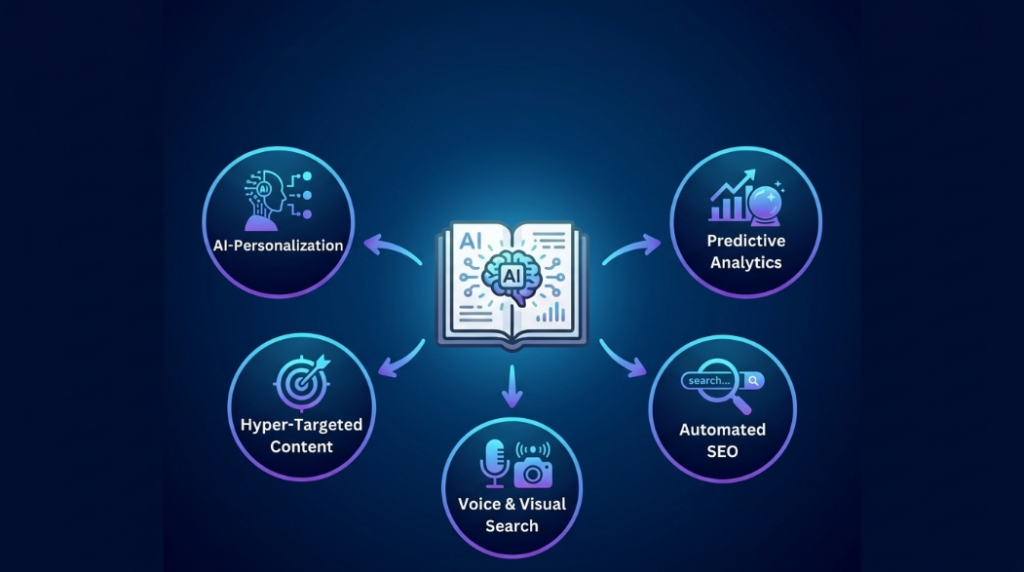
As we enter September 2026, digital marketing has moved far past early-year hype and speculative forecasts. With only three months left in the year, the impact of artificial intelligence on brand discovery, search behavior, and audience engagement is fully established.
What began as an emerging shift toward AI-assisted search at the start of the 2020s is now the baseline operating environment. Buyers rarely scroll through pages of blue links; instead, they consume synthesized summaries, interactive AI answer engines, and direct recommendations.
For marketing leaders planning Q4 pushes and setting early foundations for 2027, staying visible requires refining how your brand presents its expertise to both human audiences and language models.
1. Generative Engine Optimization (GEO): Securing Your Share of Model Voice
Traditional Search Engine Optimization (SEO) was built on driving clicks to a landing page through target keywords. In late 2026, discovery relies heavily on Generative Engine Optimization (GEO), the practice of organizing and authoritative-proofing content so LLMs, conversational assistants, and generative search environments synthesize and credit your brand.
With zero-click queries now accounting for a substantial portion of search activity, success is no longer measured solely by site visits. It is measured by your Share of Model Voice – how often and how accurately your brand, products, and insights are cited when buyers ask AI engines for solutions.
Actionable GEO Framework for Q4
| GEO Pillar | Core Objective | Key Implementation |
| Structured Answers | Enable rapid AI synthesis | Direct, high-density definitions, summary lists, and explicit Q&A blocks near page tops. |
| Technical Context | Ensure precise entity mapping | Comprehensive schema markup, JSON-LD metadata, entity tags, and explicit content taxonomy. |
| Original Proof | Demonstrate domain authority | Primary research data, proprietary statistics, verified expert quotes, and customer case studies. |
2. From Automated Tools to Autonomous Workflows: The Current AI Ecosystem
The role of AI in daily marketing operations has shifted from basic text generation to autonomous, cross-channel execution. High-performing teams are leveraging three primary capabilities as 2026 draws to a close:
| Capability | Core Mechanism | Business Impact |
| Hyper-Personalization | Dynamic content rendering | Adjusts messaging, product positioning, and creative assets in real-time per user session. |
| Predictive Attribution | Machine learning forecasting | Analyzes intent signals and consumption patterns to forecast pipeline and reallocate ad spend dynamically. |
| Multi-Agent Orchestration | Autonomous task execution | Connects specialized AI agents to handle intent research, draft personalized variants, and audit compliance. |
Dynamic Content Rendering
Personalization has evolved past basic email merge tags. Modern web and app experiences adjust messaging, product positioning, and visual assets dynamically based on real-time user intent signals and historical interaction data.
Predictive Campaign Attribution
Rather than reviewing what happened last month, predictive models analyze real-time account behavior, content consumption patterns, and intent data to forecast pipeline metrics, allowing teams to adjust ad spend dynamically before a campaign underperforms.
Multi-Agent Orchestration
Marketing teams increasingly rely on specialized AI agent workflows, automated pipelines where one agent analyzes intent data, another drafts personalized variants, and a third audits compliance, leaving human strategists free to focus on creative direction and brand positioning.
3. Connected Content Ecosystems Replace Isolated Blog Posts
Publishing standalone, 1,000-word blog posts in isolation no longer builds domain authority. Generative search systems evaluate how comprehensive a brand’s total footprint is across an entire topic.
Winning content strategies in late 2026 focus on building interconnected content ecosystems designed to feed multiple discovery channels simultaneously.
The Ecosystem Blueprint
- Central Authority Hubs: Build comprehensive resource hubs around core business topics, linking out to targeted sub-topics and technical deep dives.
- Modular Asset Libraries: Break major content assets down into bite-sized, structured components (FAQ sets, data tables, video transcripts) that can easily populate conversational interfaces and social feeds.
- Omnichannel Signal Amplification: Ensure your core insights exist in multiple formats: video, audio, text, and structured data, giving language models diverse format signals to verify your authority.
4. Q4 Checklist: Auditing Your AI Footprint Before Year-End
With only three months remaining in 2026, use this streamlined operational checklist to align your current assets with AI-driven discovery before entering the annual planning cycle:
| Strategic Objective | Action Item | Success Metric |
| Generative Audit | Query major AI engines with your core business problems to see if your brand is cited. | AI Citation Rate & Generative Answer Presence |
| Structure Refresh | Reformat top-performing legacy assets with clear summaries, Q&A blocks, and schema. | Increased zero-click visibility and referral traffic |
| Data Enrichment | Audit upcoming Q4 content to ensure every piece includes original data or expert quotes. | Higher indexing priority and citation frequency |
| KPI Alignment | Shift team targets from pure pageviews to brand mention frequency and intent-driven conversions. | Pipeline influence and qualified lead volume |
Moving Forward
As 2026 comes to a close, digital visibility is defined by authority, context, and accessibility. AI systems are not replacing the need for high-quality marketing; they are raising the bar for what qualifies as authoritative content. By structuring your expertise for generative engine discovery and grounding your strategy in unique human insights, your brand can finish 2026 strong and enter 2027 with a clear competitive advantage.
Thanks for stopping by! Got an interesting project or inquiry? Let’s talk.
0 Comments