The Essential Soft Skills Fresh Graduates Need for a Career in Tech Sales
The technology sector moves fast, continuously launching products that redefine how modern businesses operate. Behind every enterprise software adoption, cloud migration, and digital transformation is a tech sales professional who helps bridge the gap between complex tools and practical business needs.
For fresh and young graduates, breaking into tech sales offers an exciting entry point into the corporate world. While companies will train you on their specific software, hardware, or platforms during onboarding, hiring managers place the highest value on a candidate’s interpersonal foundation: their soft skills.
In modern Business-to-Business (B2B) tech sales, deals are won through consultative problem-solving rather than high-pressure pitches. Developing the right interpersonal toolkit early in your career is what helps entry-level representatives build trust, close deals, and advance quickly.
The 6 Core Soft Skills Every Tech Sales Professional Needs
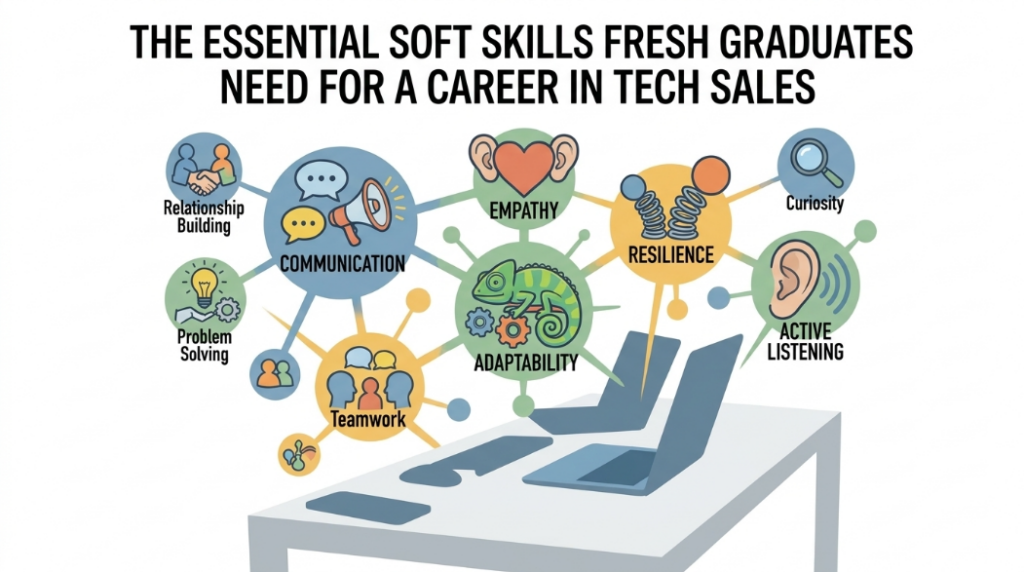
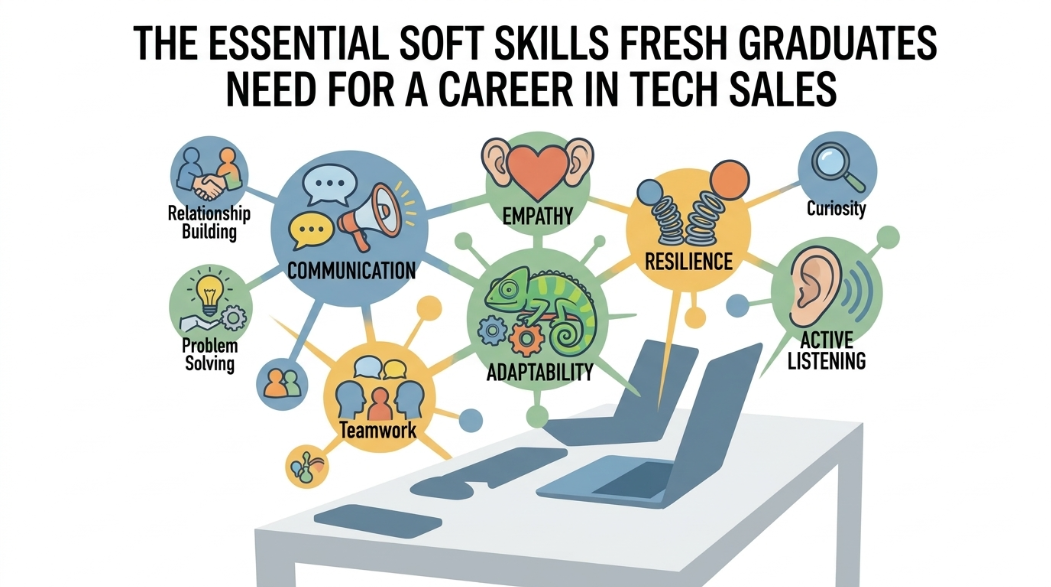
To stand out in entry-level roles such as Sales Development Representative (SDR) or Business Development Representative (BDR), graduates need to cultivate six primary soft skills:
- Active Listening: In tech sales, you cannot offer a solution until you fully understand the client’s problem. Active listening means paying attention to what a prospect says, asking insightful follow-up questions, and resisting the urge to jump straight into a product pitch.
- Adaptability and Agility: Software updates, changing buyer priorities, and shifting market conditions are everyday realities. Successful sales representatives pivot smoothly when a prospect changes direction and quickly adjust to new tools and outreach strategies.
- Curiosity and Continuous Learning: You do not need to be a software engineer to sell technology, but you do need an appetite for learning. Curiosity about how businesses run, how departments operate, and how specific tools drive efficiency helps you connect with decision-makers.
- Empathy and Consultative Mindset: Corporate buyers are looking for trusted advisors, not aggressive salespeople. Empathy allows you to put yourself in the client’s shoes, understanding their daily operational bottlenecks, budget constraints, and workplace pressures.
- Resilience and Rejection Tolerance: Sales involves facing unanswered emails, cold call declines, and lost deals on a daily basis. Top performers view rejection as routine feedback rather than a personal setback, maintaining steady effort and a positive attitude.
- Concise Communication: Executives are busy and value brevity. Whether you are writing a brief prospect email or presenting a discovery call summary, you must be able to translate complex technical concepts into clear, plain business language.
How Soft Skill Needs Vary by Academic Discipline
Your academic background naturally shapes how you approach sales. While every graduate needs the core competencies above, your major typically determines your starting strengths and the specific soft skills you will need to intentionally develop.
| Graduate Background | Natural Strengths | Primary Soft Skill Focus |
| Business & Marketing | Commercial awareness, market strategy, and an understanding of business ROI. | Patience & Active Listening: Learning to slow down and let the prospect explain their problem rather than rushing to pitch a solution. |
| STEM & Engineering | Technical credibility, logical problem-solving, and deep product comprehension. | Business Translation: Learning to explain why a technology matters for a company’s bottom line rather than focusing on how it works under the hood. |
| Humanities & Social Sciences | High emotional intelligence, empathy, research capabilities, and strong storytelling. | Commercial Assertiveness: Developing comfort around financial metrics, pricing discussions, and leading assertive sales conversations. |
Building Your Advantage
Breaking into tech sales does not require a computer science degree or years of corporate experience. Hiring managers look for coachability, clear communication, and the drive to solve real problems for organizations. By recognizing your natural strengths and proactively refining your growth areas, you can stand out in interviews and build a lucrative, long-term career in the technology industry.
Thanks for stopping by! Got an interesting project or inquiry? Let’s talk.
0 Comments