The Ownership Mindset: Why the Next Generation Must Build, Not Just Manage
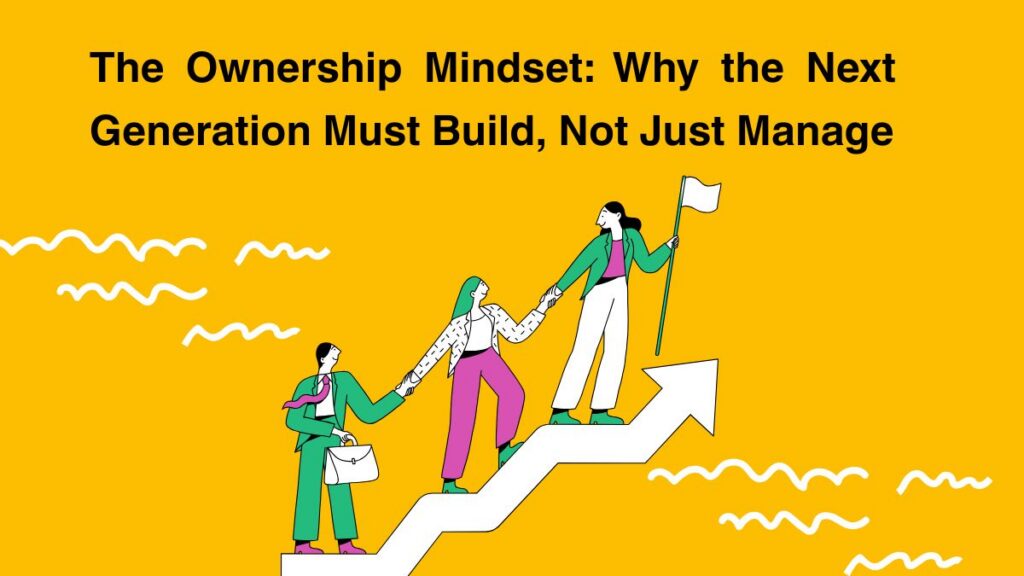
I used to think that a business degree came with a map. We were trained to step into established corporate structures, hand over our credentials, and become the meticulous stewards of someone else’s predictability. We were taught to manage things. We were taught to look at a smoothly running system, polish the edges, and keep the gears turning exactly as they always had.
But predictability is a legacy currency, and the map they gave us doesn’t work in the fog of a fast-paced tech landscape.
When you dive headfirst into building software solutions without a traditional engineering background, the walls of that structured corporate blueprint immediately crumble. You find yourself standing on entirely unfamiliar terrain, facing an intimidatingly steep learning curve. There are no predefined boundaries or ready-made handbooks for the quiet, heavy friction of early-stage entrepreneurship. In those early days, a managerial mindset is actually a liability. A manager looks at a broken, chaotic workflow and waits for a green light, a consensus, or a policy change before adjusting course.
A builder doesn’t wait.
To survive the shift from a business graduate to a tech innovator, you have to trade the map for a compass. You have to shed the comfort of standard frameworks and step into what I call an ownership mindset. True ownership isn’t just about a title; it is a profound internal shift where you look at a complex, messy problem and realize that its resolution rests entirely on your shoulders. It means converting the immense, raw pressure of startup struggles into strategic resilience. Suddenly, a lack of a technical background stops looking like a barrier and starts looking like an invitation—a prompt to let intense curiosity guide you into mastering complex ecosystems from the ground up.
When you choose to build instead of just manage, the way you look at the world changes. You stop looking for hyper-local comfort zones or traditional checkboxes. Instead, you find yourself championing borderless collaboration, reaching out to unite diverse, cross-functional teams from anywhere and everywhere. You realize that the most resilient engines of digital transformation are built when we bring together minds from all corners of the world to turn complex, disjointed workflows into seamless human experiences.
The next generation of professionals doesn’t need to be handed a legacy process to sustain. We need to be the ones who look at the gaps, embrace the friction, and possess the absolute accountability to engineer something meaningful in its place.
0 Comments